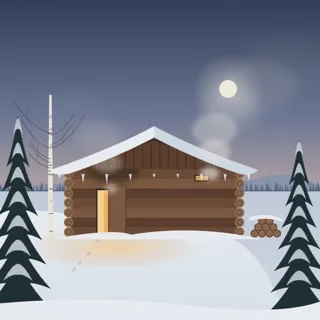
Kekri was the end of the harvest, the autumn feast around the start of November, when the dark comes early. The family bathed in turns, men and then women. Then the sauna was made ready once more, with fresh water, a clean whisk and the stones still hot, and nobody went in. That turn was for the ones who came before. In some places they got the first turn instead of the last.
The sauna was where life began and where it ended. The dead were washed and dressed there, with great care.
Löyly, our word for the steam, is one of the oldest words in Finnish. It goes back to a Finno-Ugric root, and its Hungarian relative, lélek, still means soul. In 1799 the Italian traveller Giuseppe Acerbi measured a Finnish sauna at seventy-five degrees (our first episode). Löyly was never a temperature.
This is the last episode of our first season. Thank you for sitting on the bench with us.
When you are on the bench next time, will you leave the last löyly?
Sources: Yle (2024) on Kekri saunas; Juha Pentikäinen (1963), via Taivaannaula; AntroBlogi (Koski 2018); Living Heritage wiki; Kotus and Wiktionary on löyly; Giuseppe Acerbi, Travels through Sweden, Finland and Lapland (London 1802).
Sounds: Freesound (CC0): ugloshlayf, craigsmith, guidofm.