In 1936 the Literary Digest, which had picked the winner three elections running, mailed about ten million postcard ballots. 2,376,523 came back, and the count said Landon, about 57 to 43. Roosevelt won 46 of 48 states.
The usual story blames the list: rich people with phones and cars. But a 1937 survey asked people whether a Digest card had reached them and how they voted. Taken together, the people on the list favoured Roosevelt. The difference was who mailed the card back: Landon voters about one time in three, Roosevelt voters about one in five.
A random spoonful gets more accurate as it grows. A self-chosen pile just gets more sure of the wrong number. George Gallup asked far fewer people and called Roosevelt, though his sample was tilted too and he still missed by about seven points. Afterwards the Digest's editors asked why so few voters in Chicago had bothered to reply. Their question was the answer.
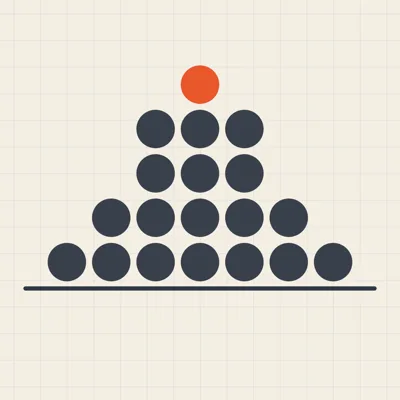
The 100 dots are our miniature of Lusinchi's 2012 estimates.
Who would you have trusted?
Sources: Dominic Lusinchi, "'President' Landon and the 1936 Literary Digest Poll", Social Science History 36(1), 2012; Sharon Lohr and J. Michael Brick, "Roosevelt Predicted to Win: Revisiting the 1936 Literary Digest Poll", Statistics, Politics and Policy 8(1), 2017; Peverill Squire, "Why the 1936 Literary Digest Poll Failed", Public Opinion Quarterly 52(1), 1988; The Literary Digest, 31 October and 14 November 1936.
Sounds: Freesound, CC0 (magnus1906, brunoboselli); Apple iMovie sound effects.