
A: Linda is a bank teller. B: Linda is a bank teller and active in the feminist movement.
In 1983 the psychologists Amos Tversky and Daniel Kahneman reported putting Linda (31, single, outspoken, very bright, a philosophy major who joined anti-nuclear demonstrations) to 142 students in Vancouver. 85 percent picked B. Doctoral students in decision science at Stanford, trained in probability, ranked B above A in a longer list: 85 percent again. The writer Stephen Jay Gould knew the answer and still felt "a little homunculus in my head" jumping up and down.
But every feminist bank teller is a bank teller, so B can never be more likely than A. Kahneman's rule: adding detail makes a story more convincing, and less likely. It fools forecasters too: at a forecasting congress in 1982, professionals gave a break between the US and the Soviet Union over three times the chance when it followed a Russian invasion of Poland.
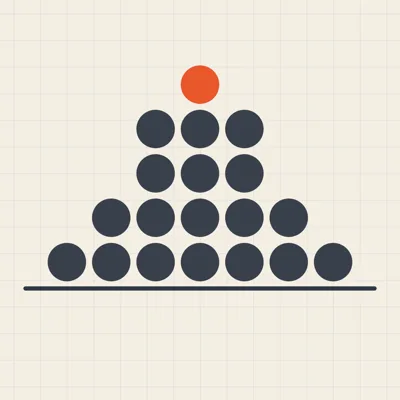
The fix is to count: out of a hundred women like Linda, how many are bank tellers? Asked that way, far fewer people slip. The hundred women in the video are our illustration.
So, A or B?
Sources: Amos Tversky and Daniel Kahneman, "Extensional Versus Intuitive Reasoning: The Conjunction Fallacy in Probability Judgment", Psychological Review 90(4), 1983; Daniel Kahneman, Thinking, Fast and Slow, 2011, chapter 15; Stephen Jay Gould, "The Streak of Streaks", New York Review of Books, 1988.
Sounds: our own, made in code (earshot, CC0).