The rule: you win if you are closest to two thirds of everyone's average. If people pick at random the average is 50, so you say 33. If everyone thinks that far, you say 22. Then 15, then 10, and the logic only stops at zero.
In 2015 about 61,000 New York Times readers played. 33 was the most popular pick, thousands stopped at 22, and thousands went all the way down to 1 or 0. The average was 28, so the winning number was 19. Zero, the only answer pure logic allows, lost to two thirds of the players.
The winner always sits one step below the crowd's average, so the game is guessing where the crowd stops. John Maynard Keynes described the idea in 1936: investing, he wrote, is like a newspaper contest where you pick not the faces you find prettiest but the ones you think the others will pick. The number version came later: a French games magazine in 1981, and Rosemarie Nagel's lab experiment, published in 1995.
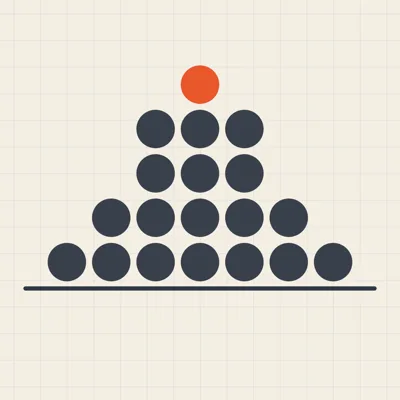
Each dot on screen is a hundred readers, from the newspaper's own data.
What was your number?
Sources: David Leonhardt and Kevin Quealy, "Are You Smarter Than Other New York Times Readers?", The Upshot, 13 August 2015; Rosemarie Nagel, "Unraveling in Guessing Games", American Economic Review 85(5), 1995; Bosch-Domenech, Montalvo, Nagel and Satorra, "One, Two, (Three), Infinity", American Economic Review 92(5), 2002; John Maynard Keynes, The General Theory of Employment, Interest and Money, 1936, chapter 12.
Sounds: Freesound, CC0 (magnus1906, KaleidacousticsAudio); Apple iMovie sound effects.